
The Mistake Most People Make First
When a garage door opener starts grinding, banging, or rattling every time it runs, the first instinct is almost always the same: grab the can of WD-40 sitting on the shelf and spray down anything that moves. It's tempting because it's cheap, it's already in the garage, and it does quiet things down for a day or two. The problem is that WD-40 is a solvent and water displacer, not a lubricant built for load-bearing hardware. It washes out the grease that's already in your rollers and hinges, then attracts dust, pollen, and road salt residue that gets tracked in all winter. Within a couple of weeks, the noise comes back louder than before, and now the hardware is also gummed up with grit. Fixing a loud opener the right way takes maybe 45 minutes and a short shopping list, and it's worth doing in order.
Tools You'll Need
- Socket wrench or ratchet set
- Silicone-based garage door lubricant (not WD-40, not grease, not oil)
- Work gloves and safety glasses
- Sturdy stepladder
- Flashlight
- A helper or a 2x4 block of wood (for safely propping an open door if needed)
Step-by-Step: Quieting the Door
1. Find out where the noise is actually coming from
Have someone run the door while you watch from the side with a flashlight. Grinding usually means worn rollers or a dry track. A rhythmic clunk often means a bent track section or a roller stuck in its hanger. Rattling near the motor head points to loose mounting hardware or chain slap. Don't skip this step — lubricating the wrong part wastes time and hides the real problem.
2. Tighten every bolt and bracket you can reach
With the door closed and the opener unplugged, go around with your socket wrench and snug up the bolts on the track brackets, the hinges, and the mounting bracket that holds the opener rail to the ceiling. In this climate, temperature swings between a mild fall day and a hard overnight freeze cause metal to expand and contract constantly, which works hardware loose over a season. This alone fixes a surprising amount of rattle.
3. Lubricate the moving parts — not the chain or belt
Apply silicone-based garage door lubricant to the roller stems, hinges, and the springs. Skip the chain or belt itself unless your opener's manual specifically says to lubricate it; most chain-drive units are factory-lubed and don't need more. A light coat on the track isn't necessary either — tracks should stay clean and dry, not greasy, so they don't collect grit.
4. Replace worn or cracked rollers
Steel rollers without bearings are the loudest option and wear out faster in cold weather when the metal contracts. If your rollers are chipped, flat on one side, or steel-on-steel without nylon, swapping them for nylon rollers with sealed bearings is a straightforward DIY job: remove the roller bracket screw, slide the old roller out of the track, and slide the new one in. Do one at a time so the door stays supported.
5. Check chain or belt tension
A chain or belt that's too loose will slap against the rail with every open and close. Most openers have a tensioning nut or bracket near the motor head — consult your owner's manual for the exact adjustment, and only tighten it a small amount at a time. Over-tightening puts stress on the motor and the trolley.
6. Add vibration isolation
A rubber isolator kit between the opener motor and the ceiling bracket, plus foam pads where the rail meets the header, absorbs a lot of the hum that travels into living space above or next to the garage. These kits are inexpensive and install with basic hand tools.
Where to Draw the Line
Everything above is reasonable for a homeowner with basic tools and some patience. Call in a technician instead of pushing forward yourself when:
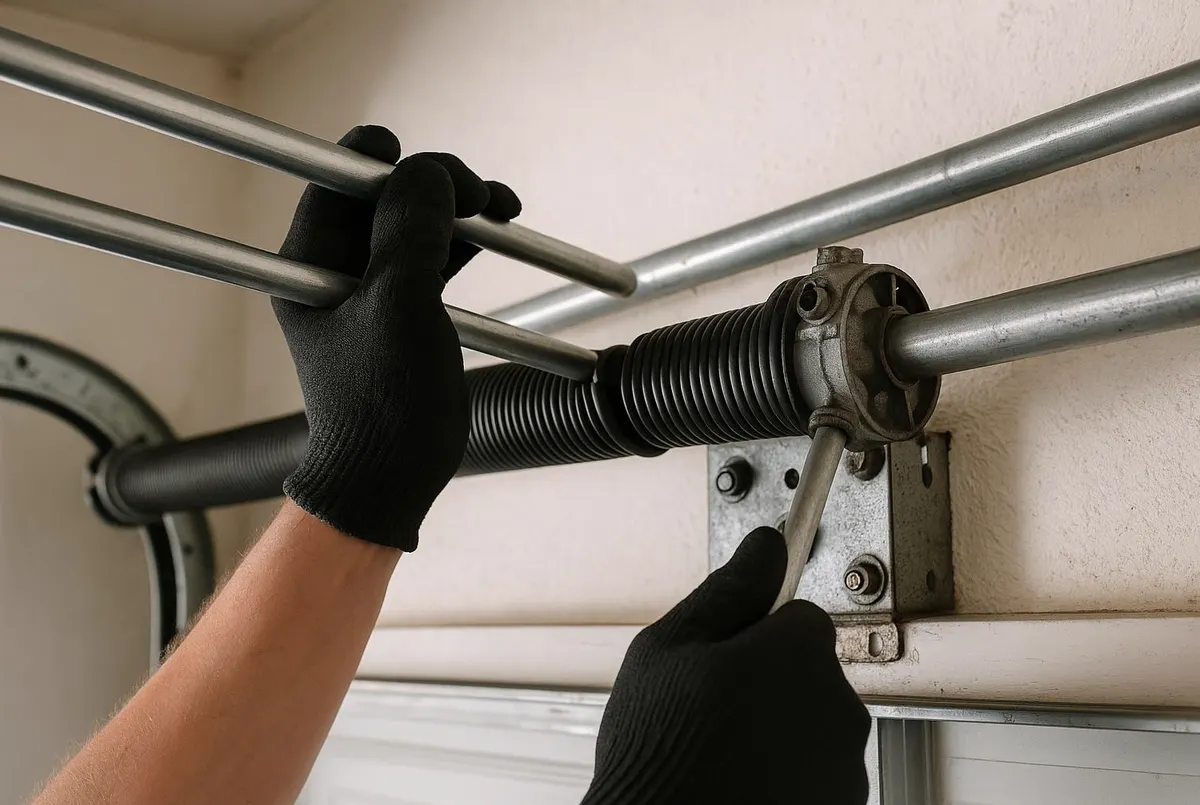
- The noise is coming from the springs — torsion and extension springs are under heavy tension and are genuinely dangerous to adjust or replace without training.
- The track is visibly bent or out of alignment — forcing it back into place can crack the metal or throw the door off its rollers entirely.
- You've done everything above and it's still loud — that usually means the opener itself is old, the gears inside are worn, or a chain-drive unit has simply reached the end of its useful life. Converting to a belt-drive opener is quieter by design, but it involves electrical work and precise rail alignment that's worth having done correctly the first time.
When to Call Cudahy Garage Door
If you've tightened hardware, lubricated the right parts, and the grinding or banging is still there, it's time for a second set of eyes. Our Garage Door Maintenance visits cover a full inspection of rollers, tracks, springs, and hardware so we can tell you exactly what's causing the noise instead of guessing. If the opener itself is the problem, our Garage Door Opener Repair & Installation service includes belt-drive upgrades for homeowners who are tired of chain slap echoing through an attached garage during early morning or late-night trips in and out.
If your garage door opener in Cudahy, South Milwaukee, St. Francis, Oak Creek, Bay View, Greenfield, Franklin, or Milwaukee is making more noise than it should, call Cudahy Garage Door. We'll track down the real cause, fix it right, and have your garage quiet again before the next hard freeze sets in.