
The Can Everyone Reaches For First
Walk into most Cudahy garages and you'll find a can of WD-40 sitting on a shelf near the door. It's the first thing people grab when a garage door starts squealing, and it's an understandable mistake. The can says it stops squeaks. It's cheap, it's already in the garage, and it does quiet things down — for about a week.
Here's the problem: WD-40 is a solvent and water displacer, not a lubricant. It strips old grease off metal parts, which is exactly why it quiets a squeak at first. But once that thin layer evaporates, you're left with dry metal that's now more exposed than before. Add in road salt tracked in from the driveway and grit kicked up during spring thaw, and you've basically primed your hardware to grind itself down faster, not slower.
Tools You'll Need
- White lithium grease or a silicone-based garage door lubricant (look for one labeled specifically for garage doors)
- A separate silicone spray for rubber seals and weatherstripping
- Clean rags
- A soft brush (an old toothbrush works fine for hinges and roller housings)
- A step ladder
- Safety glasses
Step-by-Step: How to Lubricate a Garage Door
- Close the door and disconnect the opener. Pull the red release cord so the door is operating on manual control only. You don't want the opener engaging while your hands are near moving parts.
- Wipe down the tracks first — don't lubricate them. This trips up a lot of homeowners. Tracks should be clean, not greasy. Use a rag to remove dust, cobwebs, and the gritty salt residue that builds up over winter. Lubricant on the tracks just collects more dirt and makes the rollers slip.
- Lubricate the hinges. Apply a few drops of white lithium grease or silicone lubricant to each hinge joint where the door panels connect. Open and close the door a couple of times by hand to work it in.
- Lubricate the rollers. Focus on the bearings at the center of each roller, not the roller wheel itself. If you have nylon rollers, a light touch is enough — too much lubricant just attracts debris.
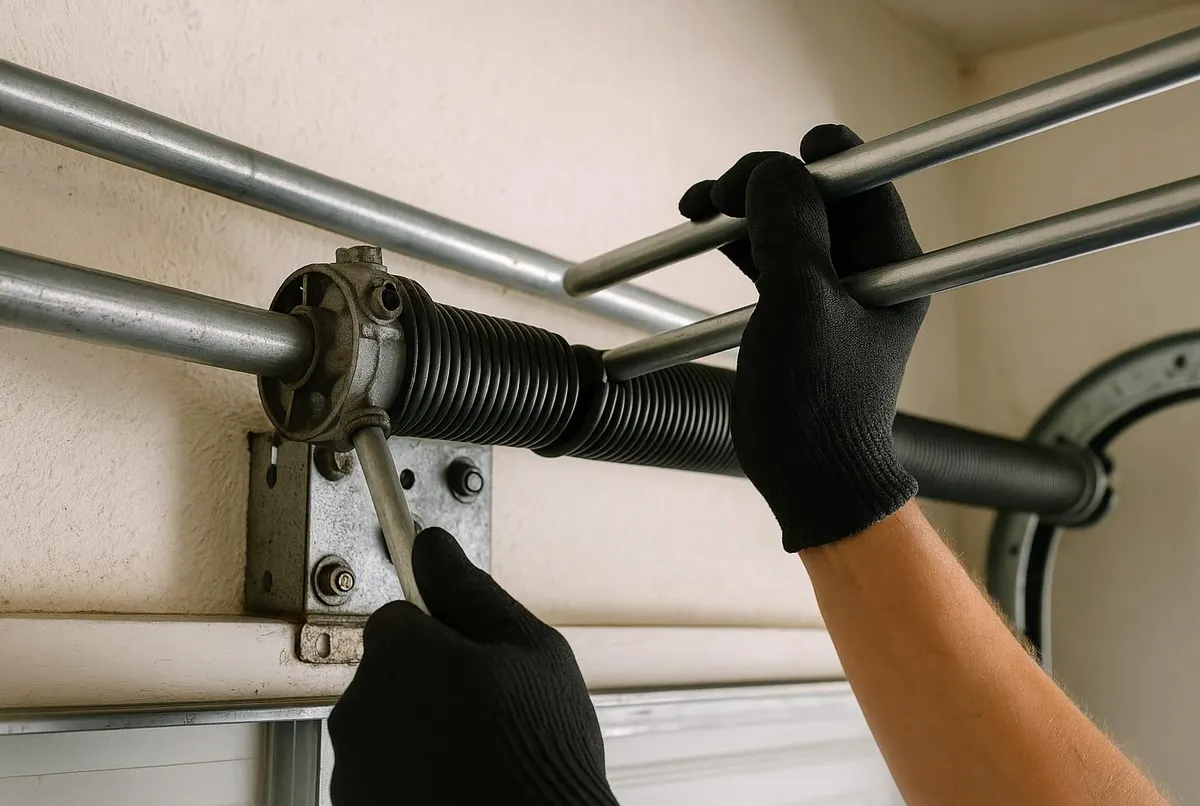
- Apply a light coat to the torsion spring. A thin layer of lithium grease along the spring coils helps reduce friction and resist corrosion from humidity and road salt. Go light here — this is lubrication, not a repair, and you should never touch the spring's tension or mounting hardware.
- Lubricate the opener's drive mechanism. For a chain-drive opener, apply lubricant along the chain. For a screw-drive opener, use the specific grease recommended by the manufacturer (it's usually included or sold separately, and it's not interchangeable with chain lubricant).
- Treat the lock mechanism. A small amount of lithium grease in the lock cylinder and bar keeps it from sticking when temperatures drop below freezing.
- Apply silicone spray to the weatherstripping and seals. This is different from the metal-hardware lubricant. Silicone keeps rubber seals flexible through deep cold instead of letting them crack and stiffen, which is common once temperatures stay below freezing for weeks at a time.
- Wipe off excess. Any lubricant left sitting on the surface just becomes a magnet for dust and grit. A clean, thin film is all you need.
- Reconnect the opener and test the door. Run it up and down a few times, both manually and with the opener, and listen for any remaining grinding or squeaking that lubrication didn't resolve.
Products to Avoid
- WD-40 — strips existing lubricant and leaves metal exposed
- Standard motor oil — too thin, drips, and attracts dirt
- Grease gun grease (chassis grease) — too thick for door hardware, gums up in cold weather
- Cooking oil or household oils — not formulated for outdoor exposure, breaks down quickly
Where the Homeowner's Job Ends
Lubricating hinges, rollers, chains, locks, and seals is well within reach for most homeowners with basic tools and an evening. What's not a DIY job is anything involving the torsion spring's tension, cable adjustment, or bent track alignment. If you notice gaps between spring coils, visible rust eating into the spring itself, fraying cables, or a track that's pulled away from the wall, that's a sign of wear that goes beyond maintenance — and torsion springs in particular are under enough tension to cause serious injury if handled without the right tools.
When to Call Cudahy Garage Door
If you've lubricated everything and the door still grinds, sags, or feels heavier to lift than it used to, it's worth having a technician take a look before winter sets in fully. Our Garage Door Maintenance visits cover a full inspection of springs, cables, and hardware condition, and if a spring is showing wear from age or corrosion, our Garage Door Spring Replacement service handles it safely with the right tools for the tension involved.
If you're in Cudahy, South Milwaukee, Oak Creek, or anywhere nearby and want a second set of eyes on your garage door before the cold really settles in, give Cudahy Garage Door a call. We show up on time and get it right the first time.